
Selling Now or Waiting: Which Decision Makes More Sense?
Your home is more than a property. It represents years of memories, meaningful milestones, financial security, and the life you’ve built.
But when the thought of moving enters your mind, one important question often follows: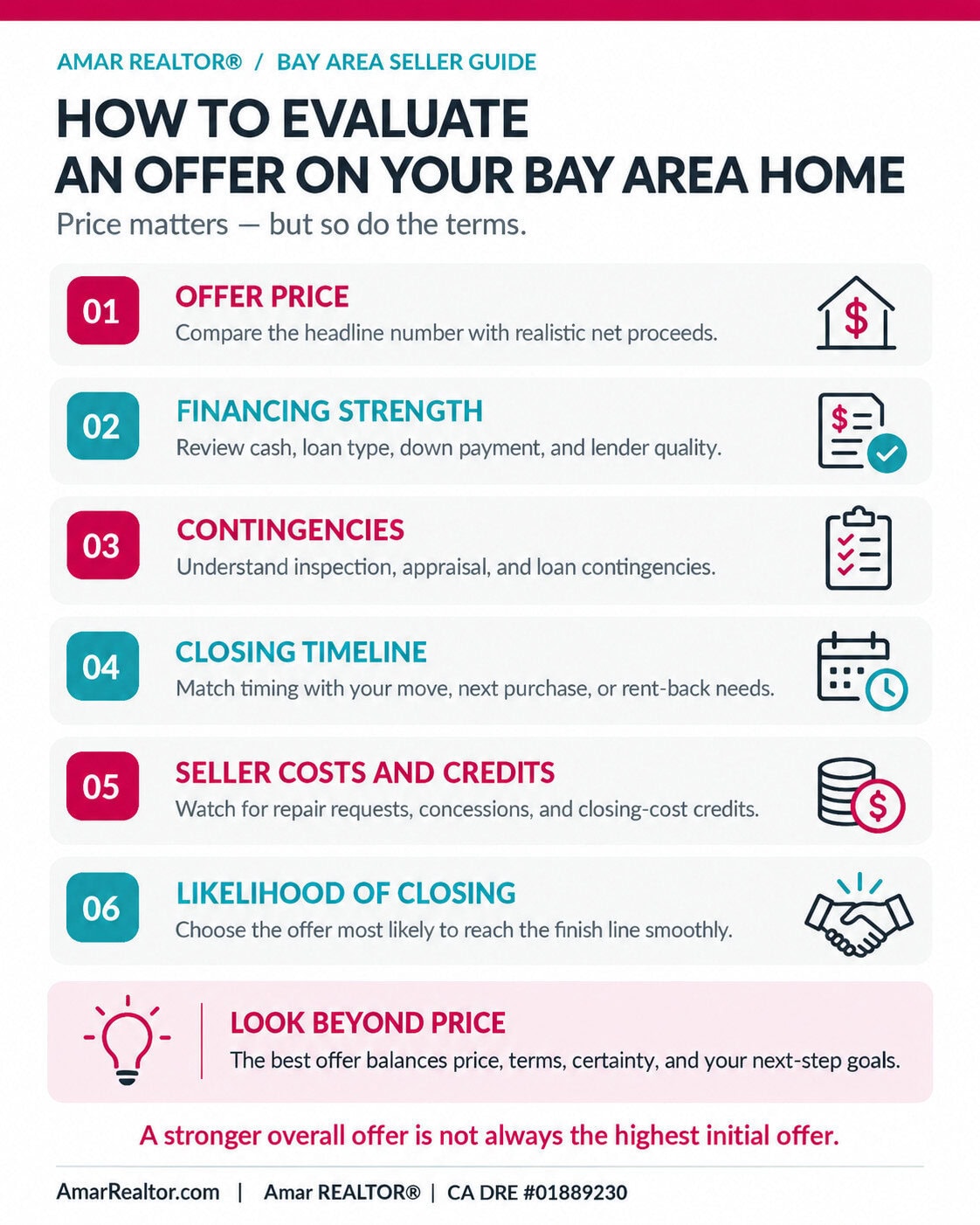
“Should I sell my Bay Area home now, or would I be better off waiting?”
Many homeowners face this question when weighing home prices, mortgage rates, buyer demand, and the uncertainty of future market conditions.
Whether you own a home in San Jose, Milpitas, Fremont, Cupertino, Palo Alto, or another Bay Area community, the timing of your sale can affect your financial outcome and your next move.
This guide will help you understand today’s housing market, recognize when selling may make sense, determine when waiting could be beneficial, and create a personalized strategy based on your home and your goals.
Quick Answer: Should You Sell Your Bay Area Home Now or Wait?
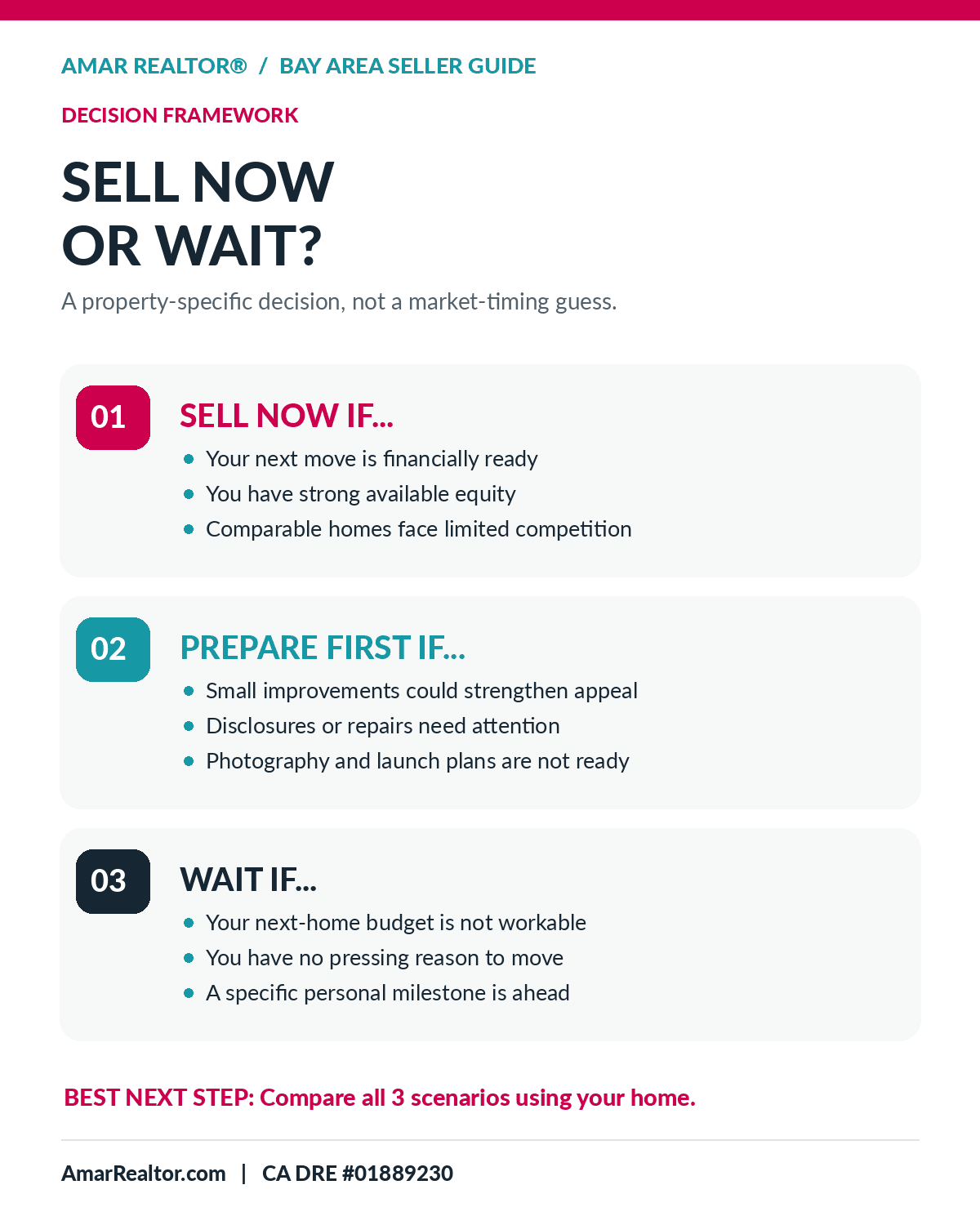
Selling now may make sense if you have substantial equity, a clear reason to move, and a home that’s competitive in today’s local market. Waiting may be better if your finances, next-home plans, or property preparation need more time. The right decision depends more on your property’s market position and your personal goals than on predicting future prices.
Key Takeaways
Your local market matters more than regional headlines. Demand and competition can vary significantly between neighborhoods.
Waiting does not guarantee a higher selling price. Prices, interest rates, and inventory can move in different directions.
Your equity and estimated net proceeds matter more than your home’s headline value.
Selling now can reduce ongoing ownership costs, but it may require a carefully coordinated next move.
Preparation, pricing, and marketing can matter as much as timing.
A personalized market analysis is the most practical starting point before deciding whether to sell now or wait.
What Is Happening in the Bay Area Housing Market in 2026?
The Bay Area housing market is not moving uniformly. Even when regional statistics suggest a particular trend, individual cities and neighborhoods may behave differently.
According to the California Association of REALTORS® August 2026 report, the median sale price of existing single-family homes in the San Francisco Bay Area was $1,272,000, compared with $1,275,000 in August 2025. That represents a year-over-year decline of 0.2%.
Regional closed sales were 4.2% lower than a year earlier, while the regional median time on market was 22 days, versus 25 days in August 2025.
August 2026 Bay Area Housing Snapshot
Data: August 2026 | Existing single-family homes | C.A.R. regional and county reporting
Bay Area median sale price
$1.272M
−0.2% year over year
Median days on market
22
25 days in August 2025
Unsold inventory index
2.6
Months; 2.9 a year earlier
Closed sales change
−4.2%
Year over year
Source: California Association of REALTORS®, August 2026 resale housing report, released September 2026. Regional figures describe existing single-family homes and are not estimates for an individual property.
What do these numbers mean for homeowners?
The figures suggest that the regional market continues to support transactions, but homeowners should not assume that all properties will receive the same buyer response.
The gap between an attractively priced, well-presented home and a poorly positioned listing can be significant.
For instance, a well-maintained single-family home with an appealing layout and limited direct competition may attract strong interest. A nearby home with extensive repairs, an ambitious asking price, or competing listings may experience a different outcome.
A regional median cannot tell you how many qualified buyers are currently interested in your particular property.
How are mortgage rates affecting demand?
Mortgage rates influence monthly affordability, which can affect how much buyers feel comfortable offering.
Freddie Mac reported a national average 30-year fixed mortgage rate of 7.40% on October 8, 2026, compared with 7.28% on October 1. These are national weekly survey averages, not individual loan offers.
Higher borrowing costs can reduce purchasing power for some buyers. However, mortgage rates are only one factor: cash buyers, household income, available inventory, and a home’s appeal also affect local demand.
Homeowners should watch mortgage rates without treating them as a precise forecast of future home prices.
Review Freddie Mac’s current mortgage-rate survey.
[VERIFIED GRAPH PLACEMENT — Mortgage Rate Trend, August–October 2026]
Five Signs Selling Your Bay Area Home Now May Make Sense
1. Your home no longer fits your lifestyle
Your home may have been perfect when you first purchased it, but your priorities can change.
Perhaps you’re ready for less maintenance, a more functional floor plan, a shorter commute, or a different location.
If moving would meaningfully improve your daily life, waiting indefinitely for a potentially higher selling price may carry a personal cost.
2. You have significant equity
Home equity is the difference between your property’s current value and the debt secured against it.
For example, if your home is worth $1,500,000 and your remaining mortgage balance is $500,000, your approximate equity is $1,000,000 before transaction expenses and other adjustments.
That amount is not the same as your cash proceeds from selling.
A property-specific evaluation will help you determine the realistic sale-price range and what you may retain after expenses.
Start by requesting a personalized Bay Area home-value estimate.
3. Your property faces limited direct competition
Suppose you own a well-maintained single-story home in Milpitas and there are very few comparable properties available nearby.
That limited competition may create a favorable opportunity, even outside the traditional spring selling season.
Conversely, waiting until several similar homes enter the market could change your competitive position.
This is why active listings and pending sales matter alongside closed comparable sales.
4. You want to reduce ongoing ownership expenses
Owning a home involves costs beyond your mortgage payment.
These may include property taxes, homeowners insurance, maintenance, utilities, HOA dues, and repairs.
Even homeowners with paid-off mortgages continue to carry ownership expenses.
Selling earlier may allow you to redirect money and energy toward your next chapter.
5. Your next move is financially and logistically achievable
If you have identified your next destination, understand your financing options, and have a workable moving plan, selling now may offer greater certainty.
Your decision should account for what happens after the sale—not just the price you receive.
When Is Waiting to Sell the Better Choice?
Waiting can be a smart decision when it is intentional and supported by a clear plan.
1. You are not financially ready for your next home
Selling a property with an attractive existing mortgage rate and purchasing another at a higher rate can substantially change your monthly expenses.
Before selling, evaluate the full cost of your next property, including financing, insurance, taxes, potential HOA dues, and maintenance.
The important question is not simply whether your current home can sell.
It’s whether the next move works for your finances.
2. Your home needs meaningful preparation
A property may benefit from repairs, decluttering, landscaping, cleaning, or strategic staging before introducing it to buyers.
However, waiting to finish renovations is worthwhile only when the expected benefit justifies the expense, time, and disruption.
A large remodel does not automatically translate into an equivalent increase in sale price.
Compare selling as-is with selective improvements before committing to major work.
3. You have no compelling reason to move
If your home suits your lifestyle, your ownership costs are manageable, and you do not need to relocate, you may have the flexibility to hold.
That flexibility has value, especially when market conditions or your plans are uncertain.
4. You need more clarity about tax implications
Homeowners with substantial appreciation, inherited property, rental conversions, or complex ownership arrangements should understand the potential tax consequences before choosing a sale date.
The California Franchise Tax Board’s capital-gains guidance explains that California generally taxes capital gains as ordinary income rather than applying a separate reduced state capital-gains rate. Federal exclusions or other rules may also be relevant.
Review your circumstances with a qualified tax professional before making an irreversible decision.
5. Waiting serves a defined personal objective
Sometimes the best timing depends on your circumstances rather than the real estate market.
A job transition, retirement plan, relocation, family arrangement, or other important milestone may make a later sale more practical.
The important distinction is having a reason to wait, rather than waiting only because you hope prices will increase.
[INFORMATIONAL IMAGE 2 PLACEMENT — Lifestyle, Equity, and Next-Move Readiness]
The Financial Cost of Selling Now vs. Waiting
One of the most overlooked aspects of housing market timing is the cost of holding a property.
Don’t base the decision solely on a possible future sale price.
Also consider ownership costs, preparation expenses, taxes, mortgage payoff, and the financial impact of your next housing decision.
Example: What if you wait 12 months?
Consider a hypothetical Bay Area property currently valued at $1,500,000.
The following examples are illustrations—not a prediction of future price movement.
Scenario
Illustrative future sale price
Price difference
Sell at today’s estimated value
$1,500,000
—
Wait; price increases 3%
$1,545,000
+$45,000
Wait; price stays unchanged
$1,500,000
$0
Wait; price declines 3%
$1,455,000
−$45,000
Now assume the home costs $2,000 per month to carry, excluding mortgage principal payments, taxes on a sale, transaction expenses, and opportunity costs.
Over 12 months, that’s $24,000 in illustrative carrying costs.
In the 3% appreciation scenario, the $45,000 price increase would be reduced to $21,000 after those illustrative costs—before other financial adjustments.
In the flat-price scenario, carrying costs would create a $24,000 disadvantage in this simplified comparison.
The lesson: Waiting for a higher selling price only makes financial sense when the potential advantages outweigh the cost and risk of waiting.
A complete analysis must also consider mortgage principal reduction, housing benefits while living in the home, sale-related costs, and the expense of alternative housing. Carrying costs alone do not establish the economic benefit of selling.
Understand your actual net proceeds
Your estimated net proceeds can be calculated as:
\[ \text{Sale Price}-\text{Selling Costs}-\text{Loan Payoffs}-\text{Other Obligations} \]Selling costs and obligations can include negotiated compensation, escrow and title expenses, transfer taxes, repairs, concessions, prorations, and applicable withholding or tax considerations.
For homeowners purchasing another property, the analysis should also account for the next home’s total cost.

What Is the Best Time of Year to Sell a Bay Area Home?
Spring often draws attention because many buyers prefer to move during the warmer months or before the next school year. But no single month is best for every Bay Area home.
Spring: March through May
Spring may offer increased buyer activity and attractive conditions for photography, landscaping, and outdoor presentation.
The trade-off is that more sellers may also enter the market.
Summer: June through August
Summer may work well for households coordinating relocation or annual schedules. However, vacations, seasonal travel, and changes in the available listing inventory can influence buyer activity.
Fall: September through November
Fall can offer opportunities when motivated buyers remain active and there is less direct competition in a particular price range.
A well-prepared property can still attract meaningful attention, but the strategy should be based on current comparable listings.
Winter: December through February
Winter often brings holiday-related scheduling challenges and fewer casual visitors, while some buyers continue searching because of genuine timing needs.
The best winter strategy depends on the property’s competitive position and the seller’s flexibility.
The best time to sell is when your property, pricing strategy, local buyer demand, and personal timing align.
A city-level or neighborhood-level comparison across recent years is more useful than relying solely on broad seasonal assumptions.
How Your Bay Area Location Changes the Decision?
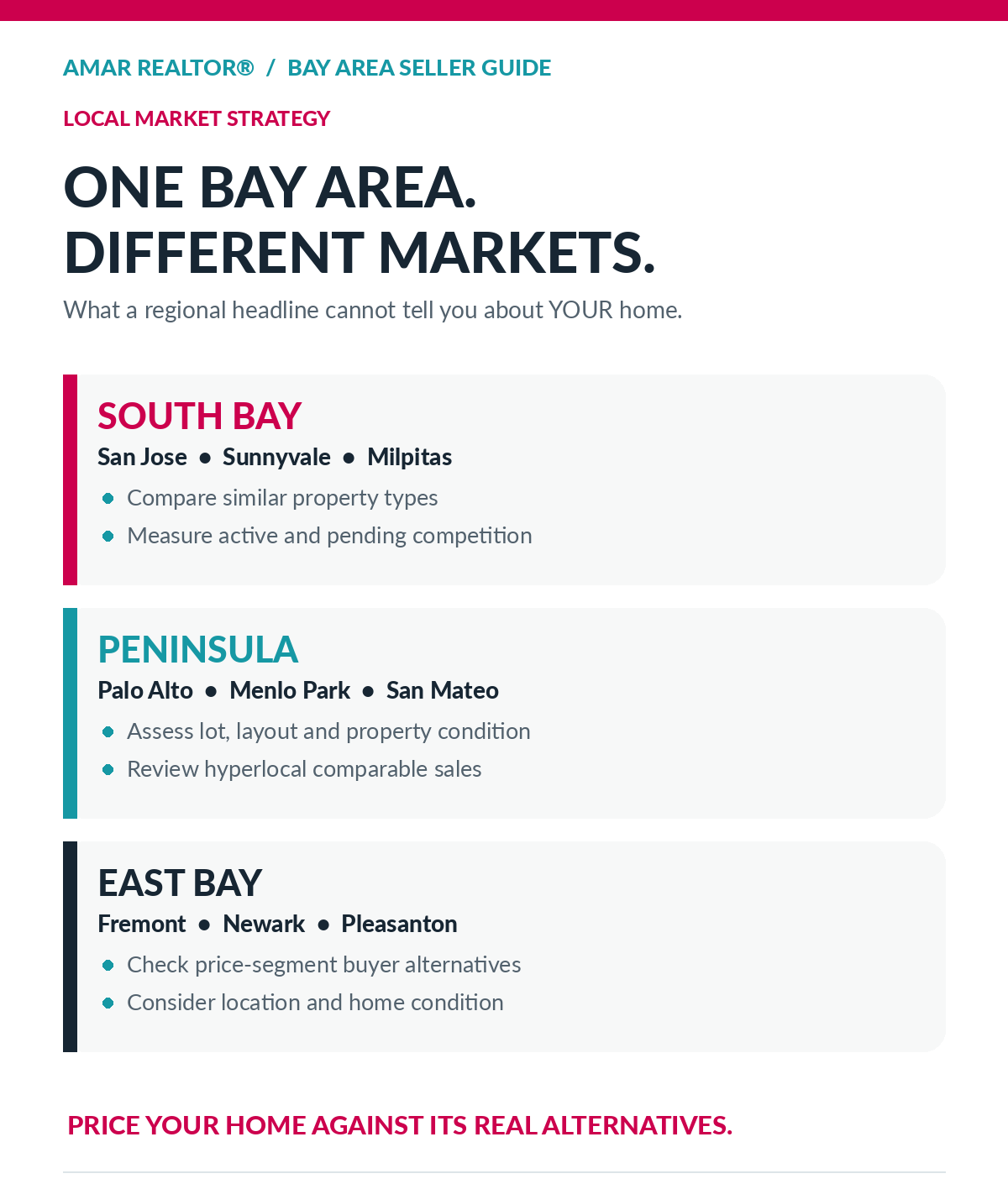
A single regional headline cannot adequately describe the housing market across Silicon Valley, the Peninsula, and the East Bay.
The California Association of REALTORS® reported these August 2026 median sale prices for existing single-family homes:
County
August 2026 median
Annual change
Santa Clara
$1,900,000
0.0%
San Mateo
$2,250,000
+13.2%
Alameda
$1,285,000
+1.3%
Contra Costa
$875,000
+2.9%
Source: C.A.R., August 2026, compared with August 2025. County-level differences may reflect the mix and number of homes sold, not simply appreciation of individual properties.

South Bay: San Jose, Santa Clara, Cupertino, Sunnyvale, and Milpitas
Sellers should pay close attention to property type, condition, location, commuting access, and direct listing competition.
A detached home in a neighborhood with few comparable listings may require a different pricing strategy from a condo or townhome competing against numerous alternatives.
Peninsula: Palo Alto, Menlo Park, Mountain View, San Mateo, and Redwood City
In these markets, lot characteristics, architectural condition, location within a city, and the scarcity of comparable properties can materially influence pricing.
High county median prices do not automatically mean every property will attract premium offers.
East Bay: Fremont, Union City, Newark, Dublin, and Pleasanton
Homeowners should evaluate affordability, local housing inventory, condition, accessibility, and the competition within their price segment.
A move-in-ready detached property and a condominium may face very different buyer pools and marketing timelines.
Neighborhood-level data is essential
Regardless of city, compare your home with properties that have similar:
Property type and approximate square footage
Lot size, layout, and functional features
Age, condition, and upgrades
Nearby location and current competitive listings
Recent pending and closed-sale activity
A personalized analysis helps answer an important question:
What alternatives will buyers compare with my home if I list it today?
What Should Home Sellers Prepare Before Making a Decision?
Even when you’re uncertain about timing, you can begin preparing without committing to a sale.
Understand your current value
Start by reviewing comparable homes that recently sold, are under contract, or are actively competing for buyers.
Remember that an automated valuation is an initial reference, not a complete property-specific analysis.
Prioritize improvements
Consider three levels of preparation: essential repairs, high-impact cosmetic improvements, and substantial renovations.
Fresh paint, improved lighting, cleaning, landscaping, and thoughtful staging may be worth evaluating before larger projects.
Prepare disclosures early
California residential sellers have important disclosure responsibilities.
The California Department of Real Estate’s disclosure guide explains obligations related to property conditions and other material information, subject to applicable exemptions.
Gather permits, warranties, repair invoices, roof and HVAC information, and relevant property documentation.
Plan your marketing before launch
A strong marketing plan may include professional photography, property descriptions, floor plans, video, appropriate digital distribution, and a strategy for reaching qualified buyers.
Pricing, presentation, and marketing should work together.
Compare offers beyond the purchase price
When offers arrive, sellers should review financing, contingencies, deposits, closing timelines, concessions, and the likelihood of a successful closing.
A higher initial price does not always produce the strongest overall offer.
For a detailed explanation of these steps, read Selling a Home in the Bay Area: The Complete 2026 Seller Guide.
Seven Common Mistakes When Deciding Whether to Sell
Waiting for the perfect market. No one can consistently identify the exact top of a local housing cycle. Instead, compare realistic scenarios and your personal goals.
Assuming every Bay Area neighborhood behaves the same way. Regional and county medians can hide meaningful variation between individual properties.
Relying solely on online home estimates. Automated models may not fully capture remodeling quality, views, lot utility, condition, or current competition.
Ignoring holding costs. A future increase in sale price does not automatically translate into a greater financial benefit.
Overpricing to test the market. An unsupported asking price can discourage buyer engagement and extend time on the market.
Spending heavily on unnecessary renovations. Evaluate expected marketability and financial benefit before beginning costly projects.
Selling without planning the next move. Consider replacement housing, financing, relocation logistics, estimated proceeds, and taxes before setting a listing date.
[INFORMATIONAL IMAGE 3 PLACEMENT — Seller Timing Mistakes]
Your Step-by-Step Plan: Should You Sell Now or Wait?
Use this simple process to move from uncertainty to a decision you understand.
Copy checklist[SHORT VIDEO PLACEMENT — Should You Sell Now or Wait?]
Amar, REALTOR®’s Local Perspective: Timing Is Only One Part of the Strategy
For homeowners considering selling a home in the Bay Area, one of the most important distinctions is the difference between general market conditions and the actual market for an individual property.
A homeowner may see headlines about price changes and assume waiting is automatically better.
But the more useful questions are:
Who is likely to buy this home? What alternatives are currently available? How does this property compare? And what financial outcome does the seller actually need?
In the South Bay, Peninsula, and East Bay, a home’s layout, condition, lot characteristics, presentation, location, and competitive price range may all influence buyer response.
Evaluate timing alongside preparation, pricing, marketing, and negotiation strategy.
Homeowners can also review homes sold by Amar REALTOR® and read experiences shared by Bay Area home sellers to understand different aspects of the selling process.
The goal is not simply to sell quickly or wait for an uncertain future.
It is to make an informed decision that supports the homeowner’s financial priorities and next chapter.
Frequently Asked Questions
1. Is now a good time to sell a house in the Bay Area?
It may be, depending on your home’s location, condition, price range, buyer demand, and competing listings. August 2026 regional data showed a median market time of 22 days for existing single-family homes, but that figure does not predict how quickly an individual property will sell. Review your immediate neighborhood before choosing a listing date.
2. Should I wait until 2027 to sell my house?
Wait if doing so supports a clear financial, personal, or property-preparation goal. There is no guarantee that selling in 2027 will result in a higher price or better net proceeds. Compare your current opportunity with the costs, risks, and benefits of maintaining ownership.
3. Will Bay Area home prices increase next year?
Future prices are uncertain. Interest rates, housing inventory, employment conditions, household affordability, and buyer preferences can affect results. Instead of relying on one forecast, build scenarios for prices increasing, remaining steady, or declining, and consider how each outcome affects your plans.
4. Is spring always the best time to sell?
No. Spring may bring more buyers in some neighborhoods, but it may also attract additional competing listings. Sellers can succeed in other seasons when the property is properly priced, prepared, and marketed. Local historical trends and present inventory should guide the decision.
5. Should I sell before buying another home?
Selling first may provide clarity about available proceeds and reduce the challenge of carrying two properties. Buying first may simplify moving logistics but can create additional financing or ownership exposure. The right sequence depends on your cash reserves, borrowing capacity, existing mortgage, and the next-home market.
6. Should I renovate my home before selling?
Not necessarily. Addressing safety concerns, defects, presentation issues, and deferred maintenance may help, but major renovations aren’t always financially justified. Compare the likely market impact, expenses, timelines, and inconvenience of improvements against selling in the current condition.
7. How do I know what my Bay Area home is worth?
Start with comparable closed sales, active competition, recent pending activity, and a property-specific evaluation of your home’s features and condition. Broad median prices and automated estimates are useful starting points, but they cannot replace a detailed local analysis. Consider requesting a personalized home-value estimate before selecting a listing price.
8. What if mortgage rates decrease after I sell?
Lower rates could improve affordability for some buyers, but additional demand may also encourage more sellers to list. Rates are not a reliable standalone predictor of your home’s future value. If you are buying another property, also examine how rate changes would affect your replacement-home financing.
9. How long should I prepare before selling?
The preparation period depends on property condition, disclosure documentation, repairs, staging, photography, and your desired timeline. A relatively move-in-ready home may require less preparation than one needing substantial work. Begin with a property review so you can establish a realistic plan without unnecessary expenses.
10. What is the first step if I’m unsure whether to sell?
Begin with a market valuation and a review of your expected net proceeds, local competition, and next-home plans. You do not need to commit to listing immediately. A clear comparison of selling now, preparing for a later sale, and continuing to own may help you decide.
Conclusion: The Best Time to Sell Is the Time That Works for You
The decision to sell your Bay Area home is not simply about choosing the right month or waiting for the highest possible price.
It is about understanding your home’s value, your financial position, current local buyer demand, and the life you want to build next.
Selling now may let you use your equity and move forward with greater certainty. Waiting may give you time to prepare, strengthen your finances, or coordinate your next chapter.
You don’t have to predict the future to make a thoughtful decision. You need a clear understanding of your options today.
Your Home. Your Timing. Your Next Chapter.
You deserve to understand what your home may sell for, what you could retain from the sale, and whether the current market supports your goals.